Human Condition · Essays
LETTER TO MY PAST SELVES
A letter of gratitude to past selves about becoming, finding meaning, and learning self-acceptance.
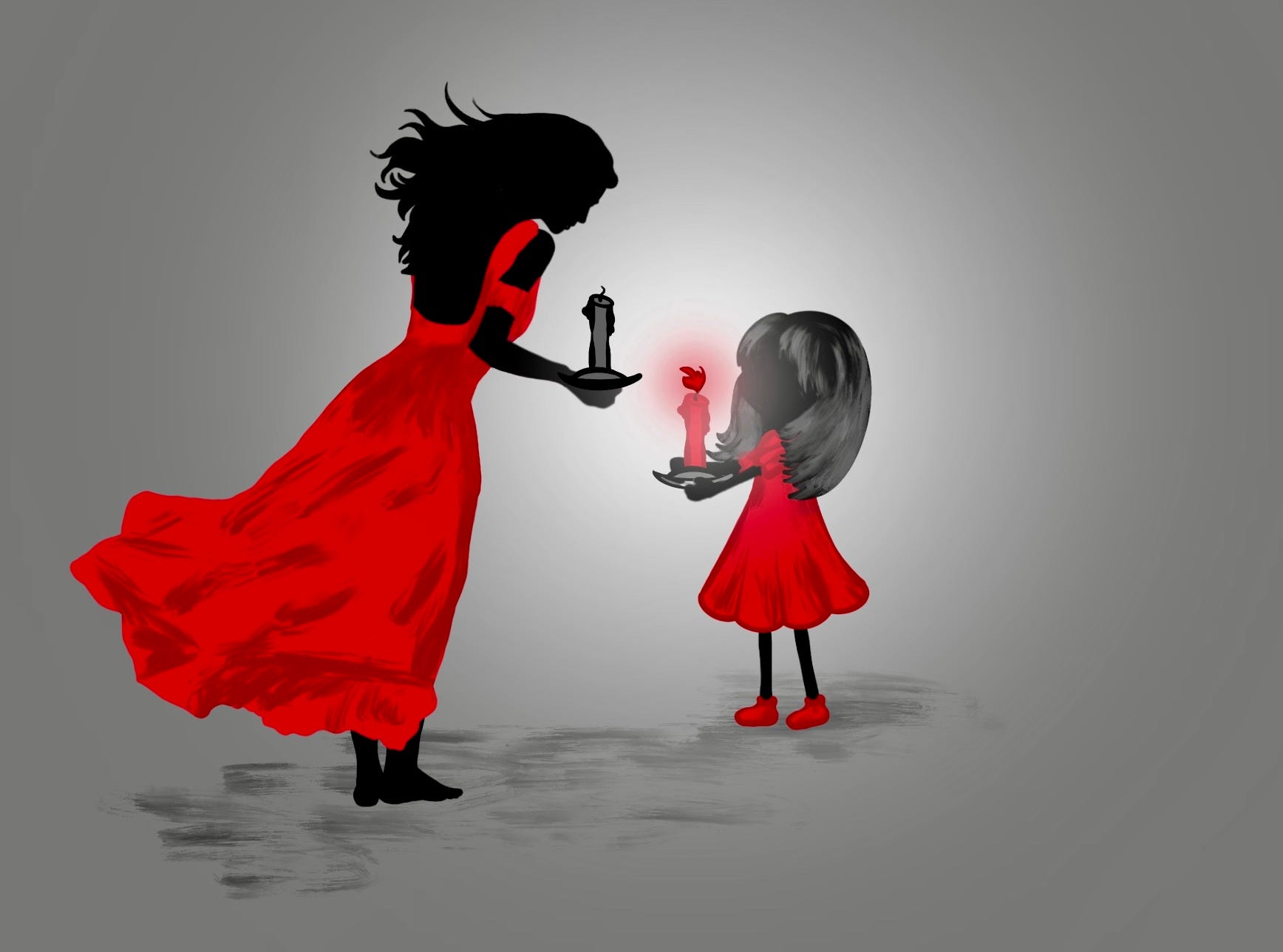
“When was the last time that you directed your eyes at the ripples on the water and wondered, how they’re just like echoes of your younger little past self, reaching to remind you that you forgot of your dreams?”
My dear past selves, let me show you that your pain and sacrifice weren’t in vain - let me share the things I know and am today because of you. I’m writing this with gratitude, and I hope that you might read this with pride. In the years leading to now, on your way to becoming me, you’ll have learned:
Perfection is an unattainable illusion, and that’s what makes it a perfect excuse for inaction. So you decided to stop waiting for a perfect moment, when you’re perfectly ready to share your perfect creations with the world and started to embrace your imperfections. My dear, you stopped expressing yourself in order to be evaluated by others, and started to express yourself because that is what it means to be you. Completely and unapologetically you. After all, doing something imperfectly is better than perfectly not doing it. And the more you accept your right for imperfect self-expression, the less you judge others who exercise that right.
***
The flaws you see in others are the flaws you don’t accept in yourself. Yet the reverse turns out to be true as well - the beauty you admire in others also exists within you. That is still your favorite lesson to learn.
***
You learned that it was possible to feel sorry for yourself for hating yourself and then hate yourself even more for feeling sorry for yourself. You learned that your repetitive thoughts about being tired of life despite being so young, your feelings of desperate terror at the prospect of another 50-70 years of this life, your hopeful curiosity about finding a valid way to “go” are called suicidal ideation and, apparently, not everybody has them. Those contemplations of “valid” ways to go that would excuse you for going: jumping in front of a gun to save a stranger or pushing someone out of a car’s way, with you, obviously, ending up blue and cold in all cases. Perceiving every day as a struggle, you still felt guilty for wanting it to end, and so instead you imagined all the ways in which you’d be justified to go. Yet through all that, you came to learn that there is nothing wrong with looking at death as a relief, when in pain - in a twisted way, not being afraid to die helps to not be afraid to live, even in a world where life doesn’t have meaning, outside of the one you imbue it with. So instead of trying to find a meaning, you started to create it, and suddenly, you found yourself living a meaningful life by infusing every aspect of it with a meaning of your choice. That was liberating too.
***
Your capacity for change is infinite, but your subconscious focus is skewed towards the terrors, so you ought to regularly apply effort to direct your conscious attention to the wonders. The slower you live, the more you live. Aggression is contagious, but so is kindness - the choice is yours.
***
The brain strives for congruency, which is a manifestation of the confirmation bias, and as such, it will do all it can to create the reality to match its convictions. And since convictions sometimes manifest as fears, it is unsurprising that you regularly found yourself in conditions that realized those fears. You lived convinced that good days would always be followed by dark days, teaching yourself to expect the arrival of the dark days, and starting to fear your good days because they became the harbinger of the dark days. Creating your own self-fulfilling prophecies. You’ve also lived in the world that you were convinced had no place for you, so you didn’t even try to look for or create such a place. Until you knew better. Because between simple and complex, the brain tends to choose familiar, so eventually, you, my love, started to regularly practice what is desirable to make it more familiar. After all, the brain is capable of magic - it can make fantasies a reality, it can notice and go for opportunities you desire, it can change itself, and it is even capable of happiness.
***
You learned the importance and the value of living in reality, even if you still long for your illusions. You learned to want to believe in what is true, abandoning wishful thinking because what is true is already so, and embracing it is less energy-consuming than rejecting it. It’s also less energy-consuming to live in reality than to sustain a fantasy.
***
Self-love used to seem impossible, especially since it’s hard to love someone you don’t even like. But you found a way around it: turns out, you can harness the brain’s aspiration for congruency - if you do things to or for yourself that you consider an expression of love, then eventually, your brain won’t have a choice but designate yourself as a lovable and even likable person, since why else would there be acts of love towards this person. Loving through action before loving through feeling. Love as a choice rather than a happenstance.
***
In your pursuit of lightness, you rejected yourself as you were then - which wasn’t light - but this self-rejection wasn’t bringing you any closer to the lightness. After all, heaviness isn’t to be rejected - it’s to be honored.
***
Your adulthood is a continuous striving towards a confident and calm version of yourself that conjures the world around her through willful self-respect - the one that embodies the present moment, fills it with herself by attending to others as part of her curiosity, and feels her own sufficiency within all that; the one that stays present with her emotions, notices them, accepts them, along with any discomfort they bring, choosing to feel and observe them without judgement. Living shame-free used to be a dream, and now you live it.
***
You used to confuse calmness with numbness and get unnecessarily frightened, trying to get yourself to experience, to feel, those familiar inner perturbations because without them it was eerily quiet within you. And such quietude wasn’t something you were used to or knew how to deal with or even felt safe in. If you were not at an emotional high - good or bad - how could you know you were alive? So you used to prefer suffering to dullness. But you learned to see peace in the mundane: after all, healthy love is calm and quiet and even boring, and so you learned to love yourself in a boring mundane way. Thank you for that.
***
It’s okay and even natural to have periods of low energy and interest, to not want anything - that’s how the brain recovers from overstimulation. Everyone’s speed of recovery is different, so you’re under no obligation to strive for someone else’s norm - just pay attention to discover your own.
***
While it’s scary to trust the world around you, what is even scarier is to live an unobserved and unshared life. These fears are in direct opposition with each other, so one has to give in. You can’t control whether someone betrays you. But you learned that you’d be okay if they do. You’ll manage. You’ll get through it. Every day, things would get a tiny bit better, lighter, warmer, even if in the moment you can’t see it. You will be okay. That’s a promise. Sometimes it’s not about controlling yourself better but about trusting yourself more.
***
Depression does not define you. Anxiety does not define you. You are not a depressed and anxious person - you’re a person that flirts, deals, and lives with depression, anxiety, and their derivatives. Yes, they have been your regular companions since you were at least nine years old. Yes, you were even younger when at night you felt compelled to regularly check if parents were breathing, terrified that if you broke your routine, something terrible could happen to them. But terror and pain don’t define you either. Yes, they changed you, but you, my dear, learned to decide on the vector of that change. And it was only after you stopped fighting depression and anxiety as your worst enemies that you were able to spot in them those shadow parts of yourself that you stubbornly suppressed and avoided. Only when you looked at self-hatred and auto-aggression with curiosity were you able to see in them signals - signals of fears, signals of unmet needs and unconscious desires, signals of crossed boundaries. Signals and also reminders - to be attentive and gentle with yourself, to approach yourself with love and respect, looking at the parts of you that are hurting with compassion and kindness, asking them what it was that they were trying to tell you. And you’ll be proud to know, that you at last learned to not just care for yourself but to want to take care of yourself. It took you time to get here, but it’s a good place to be.
***
It’s okay to reveal your depressed messy self to others - your people will have an easier time finding you when you are not wearing masks, and they happen to accept and like you just the way you are; while not-your people will get to leave and stop wasting your energy on sustaining those relationships.
***
Everything is a choice, whether or not you’re aware of it. Some choices are conscious and some aren’t; some are grounded in actions, and some are manifested through inaction. Still, the moment you finally saw that everything was a choice was the moment you stopped being an NPC in the game of your life. And whether you like it or not, there’s no going back. It’s not something you can unknow - you can fight it, you can hate it, but what is true is already so, and resistance requires quite a bit of energy, so it’s better to just give in to the changes that this knowledge will bring to our life. Because the moment you learned that everything was a choice was the moment you claimed authorship of your own life. That’s when you learned to look at your circumstances and instead of beating yourself up for their undesirable aspects, you started to ask yourself what choices have led here and what was the objective behind those choices - not to shame but to learn. My love, you are NOT a casualty of your circumstances, incompetence, poor planning, inattentiveness, mistakes, or whatever else might come to mind - you create your life, and the more you are aware of your unconscious choices and objectives driving those choices, the more influence you can exert over them.
***
While you might not be able to change another person’s adopted role in a relationship, you are able to change your own role and the way it contributes to or even perpetuates theirs. It’s not about blaming the “victim” - it’s about empowering the “victim” to recognize her role in sustaining her victimhood, how her actions or lack thereof keep her in the life she doesn’t want. Because once you took responsibility for where you were, you finally discovered response-ability - the ability to respond to your life in the way that furthers your true desires.
***
It’s okay to disappoint and to feel disappointed - expectations should be regularly checked and aired. Life doesn’t exactly tend to follow your plan. Which makes expectations, along with comparisons, the enemy of happiness. Gratitude is the language of happiness, and you learned to speak it even towards yourself.
***
You learned that a big source of your despair - that no matter how you should live your life, there is no way to live it that wouldn’t be filled with regret and sorrow and disappointment - is also a source of freedom. Because if no matter what you do, what decisions you make, or which path you choose, you’ll be disappointed, then disappointment becomes a constant and can be ignored. After all, by the time you are me, you’ll have already made the biggest mistake and gained the biggest regret and disappointment of your life - all other regrets will be dwarfed by it. And while the pain of this regret will haunt us for a long time, it also provides a twisted liberation because no other mistake could ever eclipse that one. So we can go around trying and erring, knowing that our worst mistake has already been made. In the end, we are made more of our mistakes than of our successes because the pain of mistakes weighs more than the joy of successes, but you don’t need to dwell on the former - just reflect on your lessons and move on.
***
What happened, happened necessarily - it had to happen based on the circumstances that precipitated the events around it. There’s lessons to learn but no use for shame. Freedom to do anything is often desired but misunderstood - for when you can do anything, it becomes hard to pick something to do.
Limitation, in moderation, can give direction and even inspire creativity.
***
Darling, you learned that everyone, including you, experiences this life for the first time, and we are all figuring it out at our own individual pace. So when some say that the right thing is the harder one, and others claim that the right thing should be easy, you learned to think for yourself and to look for a third (and fourth, and fifth) alternative. You learned to not just ask questions, but to have fun with them, with you favorite question being “What for?” If the natural inclination of the heart is for darkness, should it really be forced into the light under someone else’s premise of that being what’s best for it? Are virtues really worth more if they don’t come easy, if one has to work for them? And what is then the worth of natural kindness, if it’s not a conscious choice to resist some known evil? Should you care about anything and everything or just what matters to you? And what if you want to but can’t care? Is a human being defined by the degree of caring or is that degree defined by a human being? How to revive something that has died in you, if you don’t really know what it is and where it’s located? And worse, if you constantly have to force yourself to care about reviving that something?
***
Very few people live their lives harboring harmful intentions towards you. So you learned to assume positive intent behind others’ actions, or at least the absence of malicious intent, which made your life lighter. The world is just a projection of what you reflect into it.
***
Regret is a form of self-resentment. It’s resenting yourself for not having made a different choice, and holding on to that resentment. And there are few things that age worse than unaddressed resentment, as it will brew into passive (or even active) auto- (and, eventually, outer-) aggression. After all, living with or being part of someone that you hold deep resentment against can be hellish - few of us are gracious enough to remain fair, unbiased, caring, and gentle towards someone we hold grudges against, even if, or especially when, that someone is us. There could even be a desire for justice, a need, an urge to engage in revenge, to punish. And it can create for such a complex internal conflict, in which instead of ensuring forward or present looking changes, we direct our attention at holding on to the past and beating ourselves over the head in a form of self-punishment. And regret is a form of self-punishment. It’s a cruel inner adult inflicting the pain of being unable to change the past on a child that didn’t know better. So you, my dear, learned to show compassion to the child. You also learned that regret is not a driving force for change - it actually can undermine and hinder your aspirations for better/different lives for yourself. Still, it can serve as a signal of wanting a difference. A lesson to not let your perceived shouldn’t’s turn into forced wouldn’t’s and then into regretful couldn’t’s. To not be afraid to try something new, remembering that you regret more the things that you didn’t do.
***
It is possible to be afraid that no change will ever be big enough to make a difference and still move forward towards yet another life experiment. Commitment is the preamble for change.
***
You’re a small universe, and you learned to take time to discover its beautiful secrets. You learned to see your heart as a little bird that is flapping its wings in fearful agitation against the cage of your chest every time when you got angry or frustrated with yourself. And that helped spark self-compassion by placing your hands on your chest and focusing on calming the little creature with soothing words and thoughts. That innocent little bird wishes for your happiness and desires your love - so you learned to take care of it, for it’s always there for you.
***
You are who you are. Here. Now. So you learned to not disrespect yourself by wishing to be somebody else. Instead, you take deep breaths and follow the movement of the air passing through your lungs, and how with it, your life moves in a never-ending dance. My love, please, never forget to be part of this dance.
***
If you think you can do something, you are right. If you think you can’t do something, you are right.
Pick wisely, but also remember, that you can do it. I know you can do it because I’ve already done it.
***
You’re worthy of being loved. You’re worthy of the love that you desire. You deserve to be happy.
***
You were born with inherent value - nobody, even yourself, can ever take that away from you. The value of your life can only go up. Even when you feel worthless, trust me, you contain multitudes within you, and each one is valuable. After all, even the tiniest bug can find a leaf that will feel its presence and wobble under its weight.
***
The highest degree of presence is not being in the moment but rather being the moment. Reaching the complete integration between yourself and the world around you.
***
It’s a beautiful time, where you are now, and you have the right to enjoy it. Be open to the transient beauty of each passing moment. Remember that when I need to feel better, I take myself to you.
***
I will not shame my past self for not knowing better.
***
I love you. I love myself. I love my life. I love people I have by my side. I’m learning constantly.
I’m evolving with each experience. I know how to be my authentic self, without excuses or regrets.
I can always do better, and I will, but not because I’m not already enough,
but because I respect myself too much to not at least give it a try.
***
Thank you for always looking out for magic, for finding magic all around you,
and for creating it when it’s not easily available.
***
You might be surprised to know that my ideal version of me is you.
P.S. The images are from my illustrated poetry book “Ode to Hope and Despair.”
Originally published on Human Condition on Substack.
Join the conversation
Leave a comment
Your comment will appear after review. Please avoid sharing private information.