Human Condition · Essays
The Summer of Change
Reflections on four days of transformational training and ten days of silent meditation during a summer of change.
This was a summer of change. A lot of change. Also transformation. So, I’d like to touch here on two of the four impactful experiences I went through over the past few months: the transformational training Batyr Pro Life in Kazakhstan and the Vipassana meditation retreat in the U.S.. In addition to supporting the other two impactful experiences - namely, my resignation from a job of 10 years and relocation to a different state - the training and the retreat complimented each other surprisingly well, even though at first they seemed to be focusing on the opposing ideas (I’ll bring it all home in the end, I promise).
Let’s start with Batyr Pro.
It was a 4-day morning-to-night (10am to midnight or later, with daily homework) group training that focused very little on theory in order to give us as much applied practical experience as possible. Each day felt like a little life - so much was brought to the surface, so much of the unconscious made conscious, and so many honest looks in the mirror taken, all despite the fact that I’ve done therapy for years, gone through various other trainings, worked with coaches - heck, I am a certified coach and a well-being trainer myself, which only goes to show that however skilled a neurosurgeon you might be, you just can’t perform a complex operation on your own brain. I thought I had done so much self-digging that I’d reached the bottom through which my glorious shovel of reflection and awareness couldn’t get any further.
Then, during the training, I learned that all that time I was not actually trying to break through that floor - I was doing just enough to tell myself that I was trying, I was working on it, but not enough to actually get any results. And through that uncommitted effort, I kept on perpetuating my ever-solidifying conviction that that was it, there was nothing else to do that worked, nowhere else to go. A pattern that had attached itself to me back around 2017 and been sucking on my life force for nearly a decade. But I broke through the floor, which turned out to be hiding many more layers underneath it, and the very first thing I found there was the little pre-teen Yelena - a girl full of so much love for the world, passion for life, and just inspiring inner strength and gentleness. I am still her. She is still me. And now she’s awake again!
I learned that for the past decade or so, I’d been playing the role of a professional sufferer - I approached misery and suffering as an unavoidable part of life, as something to accept with humble resignation, rather than do something about it. The epitome of accepted learned helplessness. And my expertise at humble suffering culminated in the following tormenting hypothetical. Remember the movie “2012” about the apocalypse and the survival of the fittest (or rather, the richest and the most able)? For the past few years, I’d been regularly revisiting the fact that if humanity were faced with the end of the world and had to choose the best and the brightest to save, I wouldn’t be picked, not by a long shot. This perception and comprehension of my own insignificance weighed me down so much that it started to ruin my motivation to do anything - if no matter the effort, I could never become “valuable enough” to be considered worth saving, then what was the point of anything? Oh, and don’t forget that the whole idea of trying to be the best at something just to prove myself to the world somehow felt reprehensible. The mind is a twisted little bugger, I know. Anyways, for years, to deal with that self-inflicted pitiful misery of insignificance, I’d been teaching myself acceptance. Humbleness. Resignation. “Yeah, I wouldn’t get saved. Yeah, I’m not useful enough. Yeah, I’m not the main character in the story of humanity.” But hey, this is where the training came in - no matter all of that, I am still the main character in my own story. And I’m so done with passive submission to my circumstances. I spent years just accepting rather than changing, rather than taking action. Enough. Being the best and the most valuable aren’t the only criteria by which to measure the quality of life. They are certainly not my criteria.
To piggyback off that, I learned that “enough” is an empty qualifier that got integrated into our lives so deeply that we’ve stopped even questioning its validity. Am I good/happy/smart enough? Do I have enough? Enough of what? Enough for what? Why are we acting as if the past is cumulative instead of focusing on the here and now? It’s not “Am I kind enough?” but “Am I kind today?” And maybe I’m not feeling particularly qualified (the imposter syndrome and whatnot), but do I do my very best to perform the job well? Not “have I become capable enough?” but “what am I doing now?” The simplicity of closed-ended questions that don’t keep us spread across a dozen shades of gray. Am I or am I not? Do I or do I not? Sometimes living in the gray leaves us living gray lives. It’s okay to introduce some black-and-white-ness - in the murky world of complexity, it allows for clarity and simplicity. (And yes, one of my earlier substack essays touched on this too)
I learned what self-love FEELS like. Not how it looks, how I’m supposed to show/act on it, or how I suspect it must feel - but what it ACTUALLY feels like. The wonderful mix of adoration, appreciation, and respect for myself, all coated in gentleness and goodwill towards the one person that is always with me and there for me. Oh, I hope everyone can experience that!
Speaking of experiencing things, I learned that energy is energy, not positive, not negative - it just is, like the elements. Water, fire, air, earth - they aren’t inherently good or evil, each can cause destruction and enable creation. When there’s a flood, we don’t tend to immediately start hating all the water. We understand the neutral nature of it. Similarly, there’s no polarity to the basic emotions - despite common beliefs, anger isn’t negative. It can result in destructive or constructive behaviors without being conceptually bad. Anger is the energy of initiation, of motion, of change, and of creation. An impulse to action often carries anger in it. So rather than denying anger its right to exist, the important skill becomes learning to cultivate and direct it. To recognize that when something or someone stirs up my anger, they’ve just given me a gift of incredible energy that I can practice directing toward my goals. And sure, I’d known all that before, but here I was reminded of it in a new way.
I also learned how much I’ve missed loving my motherland, my country, my roots, my beautifully complex cultural heritage (ethnically Ukrainian, born Kazakhstani, speaking Russian) - I’ve been repressing that love, hiding behind occasional judgement and arrogance, even looking down on my own people and my home, keeping myself ignorant of how wonderful they all are. During this experience, I’ve gotten to see just how much beauty people have inside of them, if I only allow them to show it, how much everyone’s been through and admire their strength. I love-love-love my home! Yet I’ve cut off the life supply to my roots and been trying to live as a tree without roots - such a cruel joke! No wonder I felt destabilized and incomplete. The good thing is that I can do something about it now and I already am.
Now, on to Vipassana.
Here’s the thing - I knew rather little about what I was getting myself into when I went there because I didn’t want to have preconceived ideas about the retreat based on other people’s experiences and then go into it expecting to have something similar. And that was the right choice. Which is why I’ll share just a little bit about the retreat itself to give you a general idea before moving on to the takeaways.
The retreat I went through was 10 days long and was defined by 4 unique characteristics. One - complete silence, and yes, not even gestures or eye contact were allowed so we could dive deep into ourselves. Two - complete disconnect from technology and the internet. I handed in my phone on day 1 and didn’t get it back till day 11 - this was marvelous in and of itself. Three - a strict regime that included 10 hours of meditation a day, with some meditations adhering to a strict no-movement protocol that aimed to teach us to remain equanimous and without judgment or aversion toward increasingly painful sensations in the body due to prolonged sitting in the same pose. And yes, I accumulated nearly 100 hours of meditation in the 10 days there - probably more than the rest of my life combined. Four - a strict precept of not killing any living thing. This meant two things: vegetarian food (and it was delicious!) and an insect relocation protocol - we had to carefully capture any and all critters in plastic cups and take them outside. And yes, there were many times I caught myself with my foot already mid-air, ready to stomp on a poor bugger, before I took a deep breath and then went to get the plastic cup to give the spider a free Uber to the nearest porch - and there were A LOT of spiders… >_<
Spending 10 days in silence, without electronics, surrounded by nature, unburdened by any responsibilities (including cooking), in the company of my mind was bliss. Indeed, I got to experience such focus and clarity, such bursts of creativity and self-knowledge - I nearly forgot my mind was capable of all that. Apparently, my mind really needs quiet time with itself - to observe, sharpen, and rest. And of course, to contemplate and integrate some simple truths and understandings. Such as the simple fact that everything changes. Comes and goes. However happy and joyful I feel right now, that state will change, so it’s good to appreciate it while I have it. However sad and miserable I feel right now, that state too will change, so it’s good to not identify myself with the feelings and just observe them as a temporary reality of the current moment. So, each moment should be treated independently, with wonder and curiosity in place of expectations.
I also integrated the realization that most of my miseries come from getting things I don’t want (and developing aversion to them), not getting things I do want (and being stuck in my craving for them), and getting too attached to my expectations. For instance, if I have an expectation that my morning meditation will make me feel joyful (because of prior experience) but that doesn’t happen, then I’ll end up feeling even worse than before the meditation, and that further deterioration in my emotional state - the additional suffering caused by the violated expectation - will now be of my own doing. Another example. After the Batyr Pro training and after Vipassana, I felt so incredibly good, powerful, balanced, and inspired, that out of habit, I got immediately so attached to these temporary states, that when they started to dissipate to make room for other emotional states, I wasn’t having it. I started to get upset and even started to devalue my experiences because “what was the point of this 10-day retreat if the effects only lasted for 2 days?!” I almost missed the whole point of equanimity. See, ironically, it’s easier to be equanimous towards painful and unpleasant sensations, to notice the rising aversion and stop it - after all, I used to be a “professional sufferer.” But it takes quite a bit more to not get so attached to the pleasant sensations and feelings that when they get replaced by something else, their disappearance causes misery. Or worse, one can actually develop aversion towards pleasant sensations out of fear of the misery that arrives when they end! Literally has been me. So now I’m paying closer attention to the moments of joy, excitement, peace, and other states in order to truly experience them here and now, with gratitude and appreciation that come from the understanding of their temporariness.
I grasped that knowing reality with the mind and knowing reality with the body are rather different things, and it’s this lived truth of reality - the reality experienced with the body through the subtlest sensations - that liberates. The lived truth of anicca or impermanence (“everything changes”), for instance. What can be simpler, right? Well, wrong. At least, it was for me. It wasn’t until I sat there, tracing sensations in my body, and actually observing them come and go, that I finally grasped the truth of the phenomenon of change not just with my mind, at the surface level, but deep within the cells of my body. Oh, look, here’s a pulsating sensation in my temples, let me observe it equanimously. Ah, now it’s disappearing. Oh, look, here’s a sharp pull in my neck. Still there. Still there. Ah, it’s gone. Without expectation. Without judgement. Just connecting with the truth of the ever-changing reality of the world at the physical level of my body.
I comprehended deeply the experiential truth of chain reactions too. Especially, when treating aversion to or craving for an experience as a reaction that sets off the chain. For instance, I might know very well intellectually that I shouldn’t get stuck in a negativity loop of aversion to my experiences and still struggle with embodying that knowledge - such as when my knee hurts, I get frustrated with the knee for hurting; that frustration then contaminates my attitudes toward and perceptions of my external reality and I might snap at my loved ones for no real reason, which then likely leads to them being upset with me, me feeling guilty for upsetting them, and the loop continues. But it is when I learn the truth of that sentiment/notion in my body (through observing the rising and passing sensations), understand where and how it feels, that I can actually start practicing not getting stuck in such loops. Pain itself isn’t the problem. Aversion to pain creates additional suffering. All sensations arise and pass. Emotional reactions manifest physically. Reaction creates further reaction. To name a few. Still, it’s hard to explain the sentiment exactly because it needs to be experienced - as if I were blind from birth and someone tried to explain to me the color blue.
And I realized that having a greater awareness of the sensations in/on my body can feel a bit disorienting and overwhelming at first, but it’s an important part of living in reality. I mean, just how incomplete is my experience of reality in which I have to rely on blind faith that there’s something behind my ears simply because for the life of me I couldn’t feel the backs of my ears? Or my middle 3 toes on both feet? The poor appendages had existed in some sort of a disconnected sensory limbo until I finally sharpened my mind enough to actually feel their existence! But this greater sensitivity to the reality of my body came with an initial cost. The first week after the training, I caught myself thinking that I had somehow became more intolerant of all the noise around me (it was a bit jarring coming back to the busy life after 10 days of serenity) and had less capacity for people and things. But what I realized was actually happening was that I’d grown a lot more conscious and sensitive to the sensations in/on my body since the retreat, so that I’m a lot more aware of how everything around me affects me (whereas in the past I was so used to ignoring them). For instance, I’m very aware now of the discomfort in my neck when I spend a bit too much time looking down at my phone. But rather than get upset with my neck for the discomfort, I use that as a signal to put my phone away and stretch. Still, this increased capacity for sensation perception is definitely taking some getting used to, but I’d rather not become desensitized again.
So yes, this too shall pass. Bad things pass. Good things pass. And suffering can come from resisting either direction of change. Equanimity is the missing piece. Anicca.
One theme that persisted through both Batyr Pro and Vipassana was the theme of community. The idea that the people I find myself around are there for a reason - each is, in a way, a reflection of where I was, where I am, and where I could be (and sometimes, where I don’t want to be). As someone who’s gotten too used to working and walking on my own, who’s fed herself the conviction that she doesn’t need anyone, it was almost overwhelming, in a good way, to experience a deep connection to all those initial strangers I met during both the training and the retreat. To let myself be so completely me that I felt filled with trust that anyone entering my heart in that state had to be my person - someone who played a valuable role in my life in that moment in time, however briefly. And I’ve come across so many wonderfully incredible people during the two experiences!
Let me bring it all home, as promised.
If during the Batyr Pro training I came to realize how much I had turned the temporary circumstances of my life and the ever-fleeting aspects of my moods and behaviors into my identity and used them to build a cumulative case against myself, then during the Vipassana retreat, I’ve discovered the practices and tools to notice and change those tendencies, to disconnect my core identity from all the noise and integrate the principle of temporariness of everything into how I live my life. You know the good old Serenity Prayer? “I pray for serenity to accept the things I cannot change, for courage to change the things I can, and wisdom to know the difference.” Vipassana taught me serenity - “Don’t demand that reality conform to expectations. Observe reality as is, without aversion or craving for change.” Batyr Pro awakened my courage - “Stop resigning yourself. If you can influence it, then act!” Now, I’m just working on developing that wisdom :)
Это было лето надежд,
Это было лето разочарований;
Это было лето укрепления отношений,
Это было лето расставаний;
Это было лето неуверенности,
Это было лето упрямого упорства;
Это было лето обид и непониманий,
Это было лето прощений и проворства;
Это было лето принятия и освобождений,
Это было лето возвращения к жизни;
Это было лето без достижений,
Это было лето, когда каждый день стоил того чтобы его прожить.
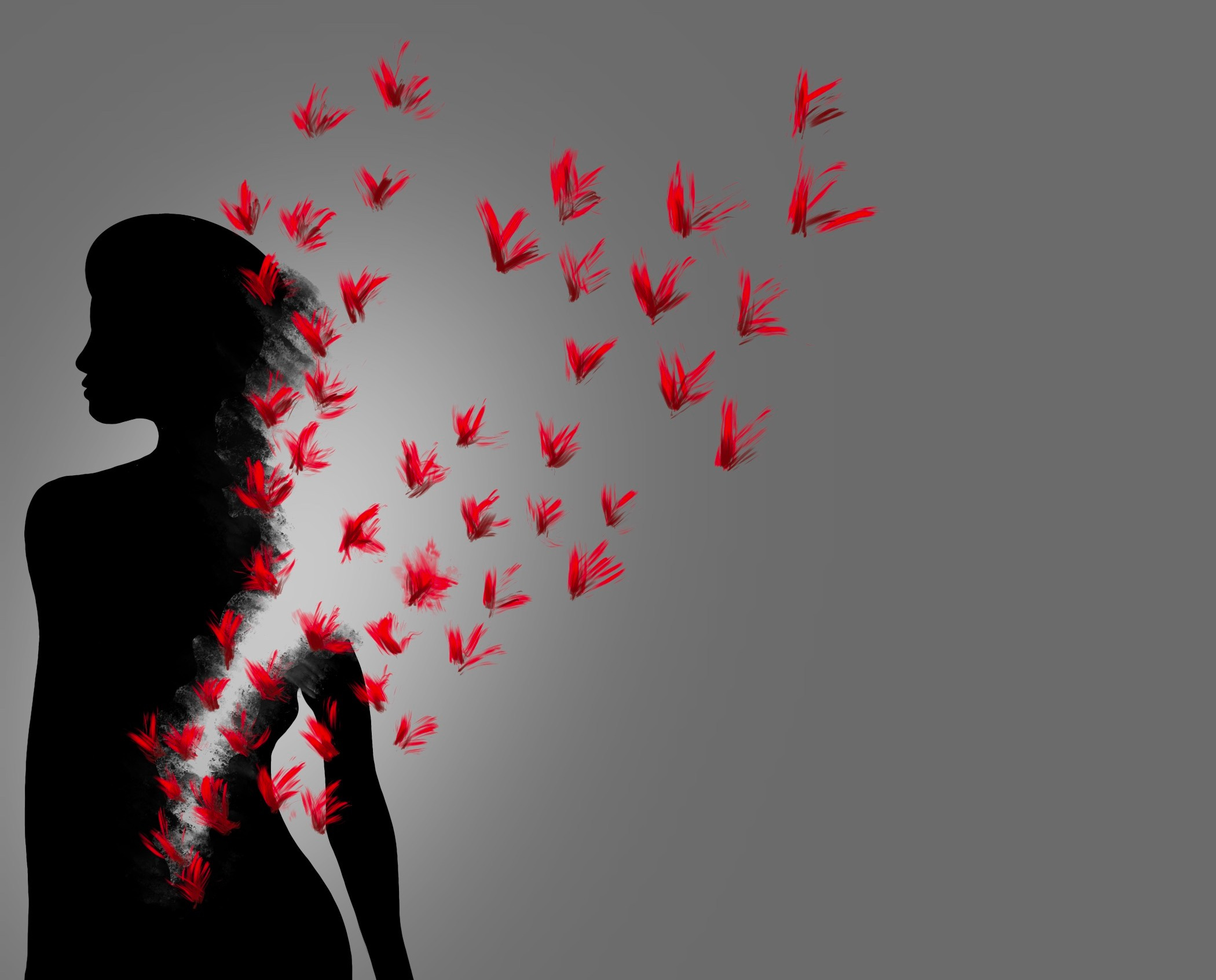
P.S. The image is from my illustrated poetry book “Ode to Hope and Despair.”
Originally published on Human Condition on Substack.
Join the conversation
Leave a comment
Your comment will appear after review. Please avoid sharing private information.