Human Condition · Essays
Why Can’t We Rest Anymore?
A Lex & Lana coaching conversation about productivity guilt, the fear of rest, and rebuilding self-trust without turning recovery into another obligation.
Disclaimer: For better or for worse, this will be a less polished essay/post. It’s been a long week with a lot of projects started but, due to their nature, none completed, which naturally creates a sense of dissatisfaction and lack of progress. It’s a week of multiple “births,” which is both exciting and overwhelming. But without weeks like this, none of my baby projects (project babies?) would exist, so let me recognize the challenge while also appreciating all that it makes possible. Also, Lana is mostly venting today, so… (Side note: It was supposed to be a short piece because, you know, I’m tired and all, but it seems that ‘tired’ only impacted the quality, not the length.)
“You excited about the long weekend?”
Lana raised her eyebrows in response to Lex’s question. Then she felt them crawl even higher, as she realized it was a perfectly non-sarcastic question, so if anything, it was her reaction to it that was questionable.
“I think we just landed on something that could benefit from coaching?” Lex smiled with recognition.
Lana smiled in return, but her smile definitely had a sour aftertaste. She sighed.
“I hate weekends. I think I’ve hated them for years now. I’m unironically that weird person who loves Mondays…”
Lex nodded, “What is it about Monday that you love?”
Lana shook her head, “Maybe love is too strong a word? As is hate, probably? It’s just that I have a complicated relationship with rest, so that’s probably what I’d like to focus on today.”
Lana knew that Lex didn’t miss the fact that she didn’t answer his question. She also knew by now that he knew that she knew it.
He smiled at her with deliberation, “Go on.”
“Well, on one hand, I can’t even give myself rest until I feel like I’ve deserved or earned it. If I haven’t, I’ll just sit there stressing about it, letting that frustration eat at my attempts to rest. On the other hand, I can’t seem to disconnect rest and recovery from the perceived subsequent need to be productive and create something to sort of justify that rest. So resting must be efficient and effective in order to enable subsequent productivity. Suddenly, rest stands in service of more work.”
“That sounds like one complicated relationship indeed. I’d even go so far as to call it a transactional relationship: Everything becomes a trade. Rest must purchase productivity. Productivity must earn rest. It’s as though nothing is allowed to exist as an end in itself. How does that land?”
“Well, the image that came to mind is this wicked furnace with pressure applied at both ends.”
By Lex’s smile of pure delight, Lana knew he appreciated the metaphor.
“I love that you didn’t call it a vicious cycle. There’s something different about it being a furnace of the kind you described - after all, no matter which direction you move, you’re adding fuel. Rest creates pressure to produce. Producing creates pressure to earn the next rest. The system becomes self-sustaining.”
“So, to paraphrase Daenerys Stormborn, how do I break the furnace?”
“Does it have to be broken?”
“I mean, I guess I can also try to take it apart, piece by piece, or stop feeding it, or abandon it completely. But all of that is easier said than done. I have zero idea what actually doing any of that would look like.”
“Last time you asked that I occasionally call your attention to what is happening in your body in order to ground you in the moment - do you think right now might be a good time for that?”
Lana closed her eyes and took a deep inhale. “Yes, let me do that. I’m just feeling a lot of frustration because this is something I’ve long since known about myself and tried to work around, and yet I’m still here, dealing with the ever-hungry furnace.” She shook her head, saying under her breath, “No, what do I feel in my body?” Then louder, she said, “There’s pressure in my forehead, tension in my upper chest, especially around my clavicles, but also tension in the back of my ribs. And heaviness in my forearms and shoulders. Yes, that about summarizes it.” She opened her eyes.
“How did it feel to do that?”
“Necessary. When we started to talk about resting, my whole body tensed up, and I suddenly felt anxious, and I think it’s because of these two things: I give too much mental importance to the idea of ‘correct’ rest, and anything that becomes too important tends to bring anxiety and stress with it; and I haven’t been very successful at ‘effective,’ let alone ‘correct,’ rest, so naturally, it stirs up unpleasant feelings. But right now, it seems my frustration doesn’t have as strong of a hold on me anymore.”
Lex nodded.
“I see. It looks like you’ve opened up yet another facet to this rest challenge. Let me quickly summarize and see if I’m missing anything. There is a need to earn rest through being productive, a need to rest effectively in order to be productive, and now also a conviction that there’s a correct way to rest. And all of that is coated in a strong perception of lack of success with anything rest-related. Did I get that right?”
“I think so. At least based on what we’ve discussed so far.”
“Is there a facet you’d like to focus on first?”
Lana furrowed her brows. “I keep on getting a mental image of the furnace, so I guess that?”
Lex nodded, “Okay, the wicked two-end furnace. Let’s see. You said that you’ve been aware of the peculiar relationship between you and rest for a long time. But was there anything before the furnace emerged?”
Lana stayed quiet for some time then gave the smallest shrug. “Not that I can actually remember…” She paused, her jaw suddenly set, “Lex, may I invoke one of my venting allowances?”
Lex chuckled, “They are part of the set of rules governing our coaching relationships that you’ve elected to establish. That is to say - yes, please, let’s put that allowance to a good use!”
Lana smiled gratefully then immediately grew serious. “Lex, you asked about ‘before the furnace emerged,’ but I think that’s the problem - my childhood was already permeated by it! I mean I’d complete my list of assigned tasks - you know, clean my room, wash the dishes, vacuum, and so on - and sit there and play, or read, or watch a cartoon, or engage with arts and crafts. I’d be completely engrossed and enjoying whatever I was doing, but then an adult would enter the room, and already I’m being scolded for idleness, for ‘doing nothing when there’s plenty of things that should be getting done.’ Because here’s the truth - there are always more things to do. They don’t end. They can’t. It’s in the nature of things or the world or some twisted rule governing it. But the initial problem isn’t that. It’s not even the punishableness of idleness. I think the primary problem is that an authority figure took all the things that brought us pure unadulterated joy - the kind that’s often only available to us when we’re still kids, like playing games, reading books (for fun rather than learning), creating something, and so on - and devalued them by lumping them into the category of idleness, of doing nothing. The category that is then associated with inappropriateness, and punishment, and guilt. I mean I’d start hiding if I wanted to read Harry Potter. Or I’d jump up and start dusting a shelf just to avoid being implicated in idleness if I heard an adult come in. I couldn’t afford being seen doing nothing. Even if that nothing used to actually mean a very important something to me. And now I’m an adult, and yet if someone enters the room, I still find myself darting off my seat, dropping my book or whatever else I might have been doing, and starting to do things around the room, as if I still fear that the person will blame me for daring to be idle. It’s ridiculous!”
Lana paused, lost in contemplation, then added slowly, “I actually think it’s a common childhood pattern for most of my peers who grew up in Eastern Europe.”
Lex nodded gravely, “Thank you for sharing that observation - it seems important, even if not pleasant.” He let a minute pass by before continuing. “With your permission, I’d like to share something, and this is me revealing my nerdy side, but did you know that what you’re describing as a fear of idleness is quite a real thing? There are actually a couple of terms floating around for versions of what you’re describing. One is ociofobia, also known as leisurephobia, defined as the fear of free time, vacation, and unplanned leisure, which often arises when one steps away from work or takes long weekends and vacations - it’s associated with an obsession with productivity, efficiency, and feeling guilty for ‘wasting time.’ And the other is thaasophobia - the fear of sitting idly, inactivity, or boredom in general, which is usually triggered by gaps in a daily schedule, lack of constant stimulation, or monotonous tasks, and is associated with a compulsive need to stay moving or multitasking to escape internal thoughts. Which of the two do you think describes your circumstances best?”
Lana gave it some thought. “I suppose it’s more of the ociofobia, although that second one also visits me on occasion. But before you ask me something like ‘What would it look like if there was no fear,’” she flashed her eyes, “I’m actually not finished venting yet.”
Lex smiled, raising his hands in amused surrender. “Please, go on.”
“My childhood only explains the emergence of one side of the furnace. And yes, now that I think about it, it would appear that the furnace was a normal one-ended furnace until I came to the U.S. Then here my teenage and young adult self got heavily doused with the whole productivity indoctrination, and the imposed values of effectiveness and efficiency got so deeply inculcated into my mindset that I used to actually perceive them as my own. Maybe I still do. Except that lately, the whole concept of hustle culture has been making me nauseous and plain mad. I mean we got literally taught at work - and eventually and unironically, I would do this kind of teaching too - to schedule rest and breaks, to put them in the calendar like they are yet another task. But that quickly becomes this double-edged sword - if you don’t schedule, then chances are you won’t rest, yet if you do schedule, then rest turns into another project!”
Lex waited a full minute before saying, “I have a strong feeling that a lot of people would relate to the second end of the furnace you just described.”
Lana’s voice went up as she hurriedly added, “It’s like a glacial torrent of my childhood fear of idleness and a lava river of the productivity obsession have crashed into each other, and I’m now finding myself standing amidst all the steam explosions and violent outbursts of solidified lava fragments!”
“Another splendid metaphor! You’re on fire today, no pun intended. Do you have a preference between the lava-and-glacial-river collision or the furnace?”
Lana shrugged. “I don’t know. I don’t think it matters that much.”
“I spot a bit of resignation in your voice.”
“I guess… It’s just… Argh, I feel weird even venting about this - I mean isn’t everyone chronically tired in this day and age?! And a lot of people actually have a lot more on their plate than me, and they barely complain. Am I just being a…mmm…can I actually say the word ‘pussy’ in our conversation?”
Lex’s eyes widened in surprise ever so slightly before he caught them, “You can certainly use whatever word you think best describes what you’re trying to say.”
Lana chuckled, surprising even herself, “But you wouldn’t be able to say it, would you now?”
Lex smiled. “I admit I’d be a little uncomfortable using that word.”
Lana shook her head, “It’s okay. I don’t remember when I ever used that word myself. It just came up for me now. I think normally I’d just say weakling or something, but ‘pussy’ just had a stronger connotation I suppose.”
Lex nodded. “That makes sense. Is this a good time to get back to coaching or is there something else waiting to be aired?”
Lana sighed. “Just how much I hate all of this, and especially how normal it’s become for me. I mean I literally regularly review what I’ve done to check if the volume or the complexity warrants a rest. And if it doesn’t but I feel tired nonetheless, then feelings of guilt, inadequacy, and even shame arise and make rest that much less possible. It’s like I’m constantly appealing to myself for permission to take a break and relax. But then, when I actually make some ‘sufficient’ progress that satisfies my internal taskmaster - ‘Okay, now you’ve done something that gives you a bit of a rest credit’ - I hate that too! I hate-hate-hate that it’s like I’m both my own judge and prison guard. And I just hate that on top of it all, I’m also my own prisoner.”
She took a deep breath. “Right now I am feeling rather tired and despite the commitment I made to myself for this month - that I’d try to listen more closely to my body and act in accordance with my wants - I keep on pushing back on that and trying to force myself into being productive, doing something. There’s a part of me that fears that it’s easy to get sucked into passivity and develop an even greater resistance to doing anything if I yield to this passivity too much, which I already feel like I am. I can’t seem to figure out how to unbundle rest and recovery from the perceived subsequent need to be productive and create something to sort of justify that rest. The damned furnace! I’ve constantly got to earn my right to rest by being productive and then also justify the rest itself by producing something more as a result… It’s just so hard to rest when there’s all this pressure to rest well.”
She took another deep breath. “Okay, venting completed.”
“I’d hate all of that too.” Lex paused. “It seems in addition to the three facets we summarized earlier, there’s a fourth one - inability to rest due to, let’s call it, a lack of experience with unearned, guilt-free rest. Does that sound right?”
“Yeah. And I don’t want to do something just to avoid being idle. I don’t want to manage every day like it’s a project. I want to live!”
Lex repeated, “I want to live.”
“Yes! And I don’t want to be constantly tired while living. Is that even an option?”
“Let me ask you this. When was the last time you think you were, to borrow your earlier words, successful with rest?”
“Mental or physical?”
“Either.”
“Hmm. Probably during the meditation retreat I recently attended. There was very little worry about whether I was being effective or efficient. I was just enjoying the quiet time with my own mind, away from the internet and technology, unburdened by any responsibilities. I mean on a regular basis I can stop doing things. I can put myself on the couch and turn on some movie. I can take myself out on a hike. I can go kayaking with my sister. But I wouldn’t necessarily be resting while doing any of that, or not doing anything at all, because what I struggle with isn’t the ability or permission to do nothing but rather the capacity to enter a state in which there is nothing I believe I should currently be doing - I might have stopped working, but my internal task manager is still on the clock.”
“Yes, it’s pretty apparent to me that you can take time off. You just insist on carrying the office around with you internally. So, what you actually might need to learn is how to let projects remain undone without the unfinished thing retaining a claim on the present hour. Now, that word you used - should - how does it relate to your relationship with rest?”
“Well, ‘should’ and also ‘supposed to’ are words of obligation - they taint an otherwise enjoyable activity with a perception of duty. For instance, I love playing my guitar or sitting at the piano and figuring out a melody - it can be very recharging for me. Yet if I have that on my schedule as my ‘rest activity,’ then suddenly the whole attitude around it changes, and it becomes something I’m supposed to do. Something I should do. Again, rest becomes another project with its own KPI. Have you ever failed at a project called Rest? I do regularly!”
But before Lex could say anything, Lana exclaimed, “Wait! Lex, I sabotage rest. Exactly because I have this built-in expectation that after a good rest, I’ll have to subject myself to quite a bit of work. You know all those expressions? A job well done deserves a good rest. The harder the work, the sweeter the rest. Rest is part of the work. I think I’ve been operating under the reverse versions thereof: A good rest deserves a well-done job; the sweeter the rest, the harder the work; work is part of the rest. No wonder I stand in the way of my own recovery - my mind subconsciously believes that that way it’s ‘protecting’ me from the hardship of work. Because apparently, recovery makes me indebted to future work. And I even sabotage my sleep. It’s like if I haven’t rested well, then I have an excuse to not work hard or to not get things done on time! So, in simple terms then, I can’t rest because I’m afraid of work.”
Lex smiled, “The twisted beauty of the human mind.”
“We’re out of time, aren’t we?”
Lex smiled again. “What will you do with this insight about sabotaging your own rest out of fear for work?”
“Well, I’m realizing that just as enjoyable and restorative things can stop being such when they become obligations, so too can a lot of simple things become restful and recharging if decoupled from internal pressure of obligation and subsequent justification. Now I have to unteach my mind its prejudice against rest by showing it that work isn’t that scary, by repeatedly engaging with work without completely depleting myself as a result. I also need to build self-trust so that if I say, ‘I’m going to work on this for 25 minutes,’ then that’s what I do, rather than trying to trick myself into a longer work period. It’s better to renegotiate with myself at the end of the 25 minutes and make a new commitment, rather than work for an hour and end up eroding my self-trust as a result.”
“That sounds like a great experiment to tackle one facet of the furnace challenge - integrating the idea that work does not mean indefinite conscription. And we can design experiments for the rest of the furnace next time we talk. Thank you for a fascinating session!”
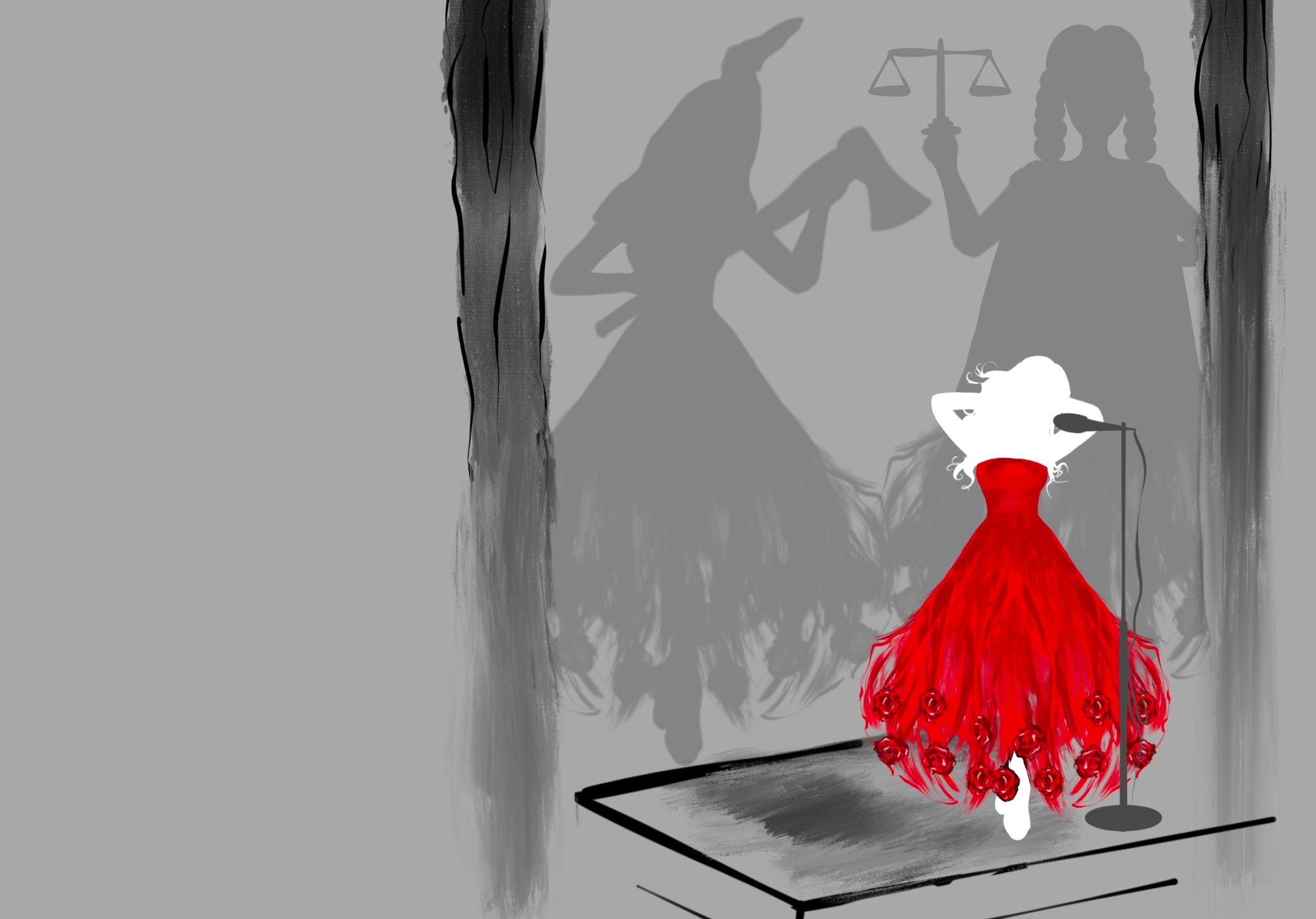
P.S. The image is from my illustrated poetry book “Ode to Hope and Despair.”
AI disclosure: ChatGPT was leveraged to check grammar/spelling/punctuation.
Originally published on Human Condition on Substack.
Join the conversation
Leave a comment
Your comment will appear after review. Please avoid sharing private information.